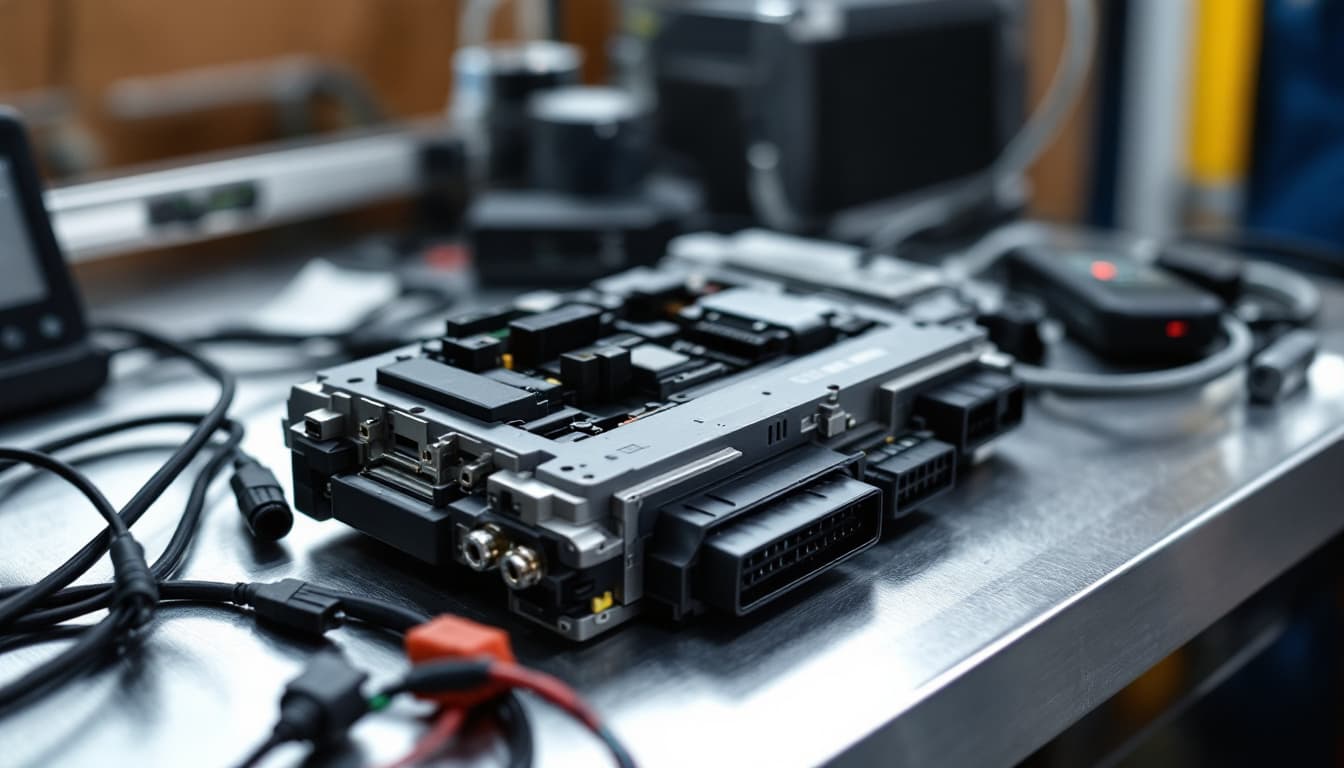
Range Rover Velar & Sport KVM Module Programming in Southlake TX
Range Rover Velar and Sport keyless vehicle module programming in Southlake TX — KVM faults, no-crank symptoms, coding a replacement. (972) 573-7978.
A Range Rover that will not recognize a key it recognized yesterday, will not crank, and throws a scatter of unrelated warnings is not usually a key problem. On the Velar and the Sport, that combination points at the module that manages keyless access itself. Southlake TX Locksmiths diagnoses and programs Land Rover modules on site. Call or text (972) 573-7978 with your VIN.
Quick Answer
The KVM — keyless vehicle module — is the unit that listens for your smart key, verifies its credential, and tells the rest of the vehicle whether to permit entry and start. When it fails or loses its programming, the classic symptom set appears: key not detected with a known-good key, no crank, intermittent access, and warning messages across systems that have nothing to do with each other.
The critical thing to understand before buying a part: a replacement KVM cannot simply be plugged in. It arrives without your vehicle's identity and without your key list, and it has to be configured to the VIN and have your keys re-registered before the vehicle will start.
Expect $130–$280 for diagnosis and $450–$950 for module programming or a coded replacement.
Land Rover Module Pricing in Southlake
| Service | Price Range |
|---|---|
| No-start / key-not-detected diagnosis | $130–$280 |
| KVM re-programming to existing vehicle | $350–$650 |
| Replacement KVM coded to VIN | $450–$950 |
| Key re-registration after module work | $180–$380 |
| Smart key replacement, Velar / Sport | $390–$720 |
| All keys lost | $580–$1,000 |
Estimates only. Final pricing depends on model year, which module is involved, and whether the replacement part is new or used. Diagnosis comes first — several cheaper faults produce identical symptoms.
What the KVM does, and why its failure looks like everything
The chain from key to moving vehicle has more links than owners assume.
Antennas around the cabin and in the door handles transmit a low-frequency wake signal. Your smart key answers. The KVM receives that answer and validates the credential against the keys it has registered. If it approves, it signals the body and powertrain side that an authorized key is present. Only then is start permitted.
Because the KVM sits at the junction of access, security and start authorization, a failure there radiates outward. Doors behave oddly. The vehicle refuses to crank. The instrument cluster reports faults in systems that are fine, because those systems are reacting to missing or malformed messages from a module that has stopped participating properly.
That is why a Velar with a KVM fault often arrives described as "everything went wrong at once." One module, many symptoms.
Symptoms that point at the module rather than the key
Distinguishing a module fault from a key fault saves real money. These lean toward the module:
A known-good spare also fails. This is the single most useful test. If both of your keys are ignored, the fault is almost certainly not in the keys.
No crank at all, with a healthy battery. A key problem typically produces a crank without start, because the engine turns and authorization is withheld. No crank at all points further upstream.
Multiple unrelated warnings appearing together. Access, lighting, driver assistance and powertrain messages arriving as a set is a network or module signature, not a key signature.
Intermittent behavior that follows no pattern related to the key's position. A key fault usually has a positional or range component — works close, fails far. A module fault often does not care where the key is.
Symptoms that began after other electrical work, a battery replacement, or water intrusion. Modules are sensitive to voltage events and moisture, and both are common triggers.
Leaning toward the key instead: shrinking range, passive entry failing while buttons still work, one key failing while another works normally, or symptoms that resolve with a fresh coin cell.
Before you conclude it is the KVM
Two cheaper faults produce very similar pictures, and both are common enough that we always check first.
The 12-volt battery. This is the most under-diagnosed cause in the entire category. A battery that reads near full at rest can collapse under load. Modules brown out, drop offline mid-handshake, and generate exactly the multi-system fault pattern described above. On a Range Rover with substantial electrical load, this happens earlier than owners expect. Load-test it — resting voltage tells you very little.
Water intrusion. Modules in these vehicles live in locations that are dry until a drain blocks or a seal fails. Corrosion produces weeks of intermittent faults before total failure. If the vehicle has been through high water or has had any interior dampness, module locations deserve a direct look before parts are ordered. Our note on water-damaged car computer modules covers what that inspection involves.
Replacing a module that was fine is an expensive way to not fix a battery problem, so we diagnose before we sell.
Programming a replacement module
If the KVM genuinely has failed, the replacement process has three parts and skipping any of them produces a vehicle that still will not start.
Configuration to the VIN. The replacement is written with your vehicle's identity and equipment configuration. Without this the module does not know what vehicle it is in, and other modules reject its messages.
Re-registration of your keys. A new module carries no key list. Every key you intend to use has to be registered as an authorized credential. Bring all of them.
Verification across the affected systems. Because the KVM touches access, security and start, a proper job tests all of them — every door handle for passive entry, passive start, remote functions, and confirmation that the multi-system warnings have cleared rather than merely gone quiet.
A caution about used modules, because we see the consequences regularly: many are locked to their donor vehicle and cannot be reconfigured. Others must match your exact model year and equipment variant. The savings on a bargain module evaporate when it turns out to be uncodeable. Check the part number with us before buying rather than after.
For how the related access module behaves on Land Rover's other platforms, our piece on the Land Rover and Jaguar RFA keyless module covers the sibling architecture, and Land Rover Defender and Evoque spare keys covers the key side.
What the on-site visit looks like
We come to the vehicle, which matters on this job specifically because a Range Rover with a KVM fault frequently cannot be driven anywhere.
Ownership verification comes first — registration, title or insurance showing the VIN, plus matching photo ID. Programming access and immobilizer functions is precisely the capability a thief wants, so verification is not optional.
Then battery load test, fault code review across modules, and a determination of whether the fault is the key, the module, the wiring or the power supply. Only after that do we quote the repair, because quoting before diagnosis on a multi-symptom vehicle is guessing.
Realistic time: diagnosis in thirty to sixty minutes; module programming and key registration adding one to three hours depending on what the diagnosis found.
Frequently Asked Questions
What is the KVM on a Range Rover? The keyless vehicle module — the unit that receives your smart key's response, validates the credential and authorizes entry and start. Because it sits between access, security and powertrain, its failure produces symptoms across systems that appear unrelated.
Can a replacement KVM just be plugged in? No. A replacement arrives without your vehicle's identity and without your key list. It must be configured to the VIN and have your keys re-registered before the vehicle will start. This is the most common reason a newly installed module produces the same no-start it was meant to fix.
Why won't my Range Rover crank even though the key is right there? If a known-good spare also fails and the battery tests healthy under load, the authorization chain is broken upstream of the key — commonly the KVM, its wiring, or a network fault preventing its messages from reaching the powertrain side.
Could this just be my battery? Frequently, yes, and it is the most under-diagnosed cause. A 12-volt battery that reads near full at rest can collapse under load, browning out modules and producing multi-system faults. Always load-test before authorizing module work.
Is a used KVM a good idea? Usually not. Many used modules are locked to their donor vehicle and cannot be reconfigured, and usable ones must match your model year and equipment variant exactly. Have the part number checked before purchase rather than after.
How much does Range Rover module programming cost in Southlake? Diagnosis typically runs $130–$280. Re-programming an existing module runs $350–$650, and a replacement coded to your VIN runs $450–$950, plus key re-registration where required.
Range Rover Velar or Sport that will not detect a key or will not crank in Southlake? Call or text (972) 573-7978. Tell us whether a spare key behaves the same and whether the warnings arrived all at once — those two details narrow it immediately.
Written by the Southlaketxlocksmiths Automotive Locksmith Team — mobile automotive module programming, immobilizer diagnosis and key service across Southlake TX 76092 and the surrounding communities.