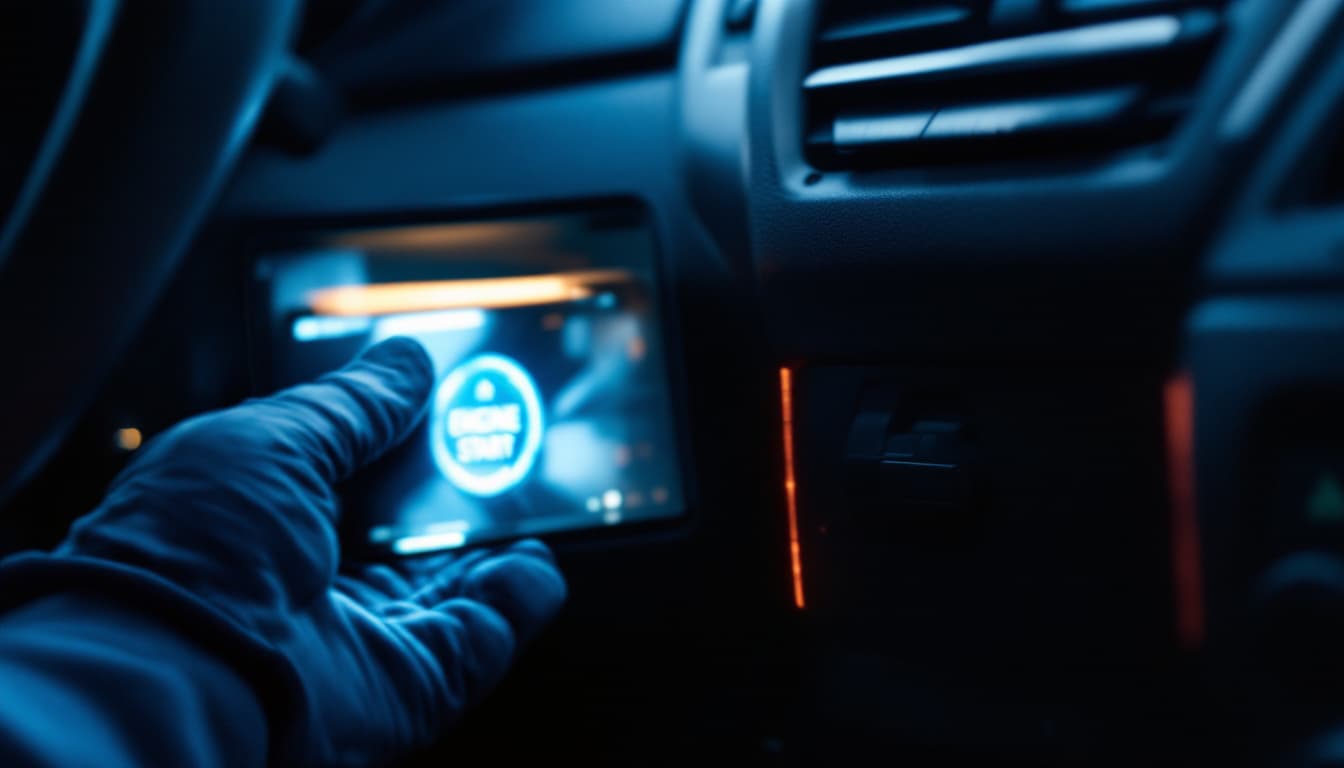
Push Button Start Problems: Module-Level Diagnosis by Make in Southlake
Push button start problems traced to the module — immobilizer, BCM, steering lock and antenna faults by make, diagnosed mobile in Southlake TX. (972) 573-7978.
Push Button Start Problems: Module-Level Diagnosis by Make in Southlake
Push-button start hides a lot of machinery behind one button. When it fails, the dashboard usually offers something unhelpful — Key Not Detected, a blinking security light, or nothing at all — and the temptation is to buy a new fob and hope. Sometimes that works. Often the fob is fine and the fault lives one layer deeper, in a module that has stopped hearing it. Southlake TX Locksmiths diagnoses and programs those modules mobile. Call or text (972) 573-7978 with your year, make and model.
Quick Answer
Push-button start failures fall into four buckets, and they can be separated in a few minutes without any parts. One: the fob itself — dead battery, water damage, or an unpaired credential. Two: the receiving antennas and interior sensors that detect the fob inside the cabin. Three: the immobilizer or body control module that authorizes the start. Four: the electronic steering lock, which on many European vehicles must release before the system will even attempt to crank.
The single most useful diagnostic step costs nothing: hold the fob directly against the start button or the marked backup pocket and press. Nearly every push-to-start vehicle has a passive backup path that reads the fob's transponder chip at close range with no battery. If the car starts that way, the fob's chip and the immobilizer are both healthy — your fault is battery, antenna or sensor. If it still does not start, the problem is deeper and module-level diagnosis is the next step.
Diagnosis & Repair Pricing
| Service | Price Range |
|---|---|
| Diagnostic scan and fault isolation | $75–$160 |
| Fob battery and contact repair | $20–$60 |
| Fob replacement and programming | $200–$470 |
| Interior antenna / sensor repair | $150–$400 |
| Immobilizer or BCM programming (existing module) | $220–$500 |
| Module replacement with VIN programming | $350–$900 |
| Electronic steering lock repair or bypass | $300–$800 |
Estimates only. Final pricing depends on the exact vehicle, which module is at fault and parts availability. We confirm the total before starting.
Step one: separate the fob from the car
Before anything else, rule the fob in or out. Three checks do it.
Test the backup start position. As above — fob against the button or in the designated slot. A successful start there is enormously informative.
Try the second fob if one exists. Two fobs failing identically points at the vehicle; one failing points at the fob.
Look for water history. A fob through a wash cycle or a pool often works intermittently for weeks before dying entirely, and corrosion on the board mimics a dozen other faults. Our guide on how to fix a wet key fob covers what is salvageable and what is not — worth reading before you spend money on programming a fob that is already corroded.
If the fob checks out, the remaining causes are on the vehicle.
Interior antennas and the "it starts sometimes" pattern
Push-to-start vehicles place several low-frequency antennas around the cabin — under the dash, in the console, near the rear seat, in the trunk — so the car can tell whether the fob is inside or outside. When one fails, the failure is characteristically positional: the car starts with the fob in the cupholder but not in your pocket, or works from the passenger seat but not the driver's.
That positional pattern is the clearest antenna signature there is. It is also why "it works sometimes" should never be dismissed as random. Intermittent almost always means a physical connection, not software.
Where the fault sits, by manufacturer
The module that authorizes a start has a different name and a different failure personality on every platform.
BMW. The immobilizer function lives in CAS on older cars and FEM or BDC on newer ones. A common presentation is a car that cranks but does not fire, sometimes with comfort-access behaviour degrading first. These modules are also frequently the reason all-keys-lost work needs bench access — see BMW CAS, FEM and BDC key programming.
Mercedes-Benz. The EIS/EZS unit is the gatekeeper, and the electronic steering lock is a well-known failure point on a range of model years. The classic symptom is a car that goes completely dead at the button with the steering wheel still locked. Our Mercedes EIS/EZS ignition repair guide covers the specifics.
Audi and Volkswagen. Kessy handles keyless access and start, and on MQB-generation cars component protection ties modules to the specific vehicle — meaning a swapped module will not simply work without being adapted. Our Audi immobilizer generation decoder explains how to identify which system you have.
Toyota and Lexus. The certification ECU (smart key module) authorizes the start. A frequent and under-diagnosed cause here is simply a weak 12-volt battery — these systems misbehave at low voltage long before the car fails to crank.
Ford. PATS is integrated with the body module. Ford's failures often present as a security light behaviour change before an outright no-start.
Chrysler, Dodge, Jeep and Ram. The WIN or RF hub module handles key authorization, and on 2018-and-newer vehicles the security gateway sits in front of any diagnostic work. See our security gateway module programming write-up.
Hyundai, Kia and Genesis. The smart key module and immobilizer are typically separate units, so a failure can knock out remote functions while leaving start intact, or the reverse.
Nissan and Infiniti. The BCM carries much of the intelligent-key logic, which is why a BCM fault here often takes out several unrelated conveniences at once.
The electronic steering lock trap
On many European vehicles the steering column carries a motorized lock that must physically retract before the start sequence proceeds. When that actuator fails, the car is dead at the button and the wheel stays locked — and it looks exactly like a key or immobilizer problem to everyone including, sometimes, a hasty diagnosis.
The tell is the steering wheel. If it will not move at all and the dash is otherwise alive, suspect the steering lock before you buy a fob. Our electronic steering lock repair guide covers repair-versus-replace on the common platforms.
When a module genuinely has to be replaced
Modules do fail outright — water intrusion, voltage spikes from a bad jump-start, and simple age all take them. A replacement is rarely plug-and-play: the new unit typically arrives blank and must be programmed with your VIN, your immobilizer data and your existing keys before the car will start. On some platforms the old module's data has to be read out and transferred, which is precisely the bench work a full auto locksmith is equipped for. Our PCM/ECM replacement and VIN programming guide walks through that process, and water-damaged car computer modules covers the flood-damage version.
What not to do
Do not buy a used module from an online seller without checking whether it is VIN-locked. Many are, and a locked module cannot be adapted to your car — it is scrap. This is the most expensive mistake in this whole category.
Do not keep jump-starting. If low voltage caused the symptom, repeated jumps can push it into genuine module damage.
Do not replace the fob first by default. It is the cheapest part to swap and therefore the reflex, but on a car that fails the backup-start test, a new fob changes nothing.
Frequently Asked Questions
Why does my push button start say "key not detected" with a good fob?
Usually a fob battery, a failed interior antenna, or an immobilizer module that has stopped authorizing. Hold the fob against the start button and press — if it starts that way, the chip and immobilizer are fine and you are chasing a battery or antenna fault.
Can a bad module stop a push-to-start car from starting?
Yes. The immobilizer, body control module and electronic steering lock all sit in the start authorization chain, and a failure in any of them produces a no-start that looks like a key problem. Diagnosis has to isolate which one before parts are ordered.
Is push-to-start failure usually the fob or the car?
The fob is the more common single cause, but far from universal — and the backup-start test separates them in seconds. If the car starts with the fob held against the button, the fault is on the fob's battery or the car's antennas, not the immobilizer.
Why does my car start sometimes but not others?
Intermittent behaviour almost always means a physical fault: a failing interior antenna, a corroded fob board, a marginal 12-volt battery, or a loose module connector. If the behaviour changes with where the fob is sitting, an antenna is the leading suspect.
Can you program a replacement module on site?
In most cases yes. A new module usually arrives blank and needs your VIN, immobilizer data and keys written into it, which is mobile work on many platforms. Some modules must be read on the bench first — we tell you which category your vehicle falls into before starting.
Will a weak battery cause push button start problems?
Frequently, and it is badly under-diagnosed. Smart-key systems are voltage-sensitive and can throw key-detection faults while the battery still has enough charge to crank. We check system voltage before condemning any module.
Push-to-start acting up? Call or text Southlake TX Locksmiths at (972) 573-7978 with your year, make and model. We diagnose fob, antenna, immobilizer and steering-lock faults on site and quote the repair before we start. Mobile service across Southlake 76092, Colleyville, Keller, Grapevine, Westlake and Trophy Club.
Written by the Southlaketxlocksmiths Automotive Locksmith Team — mobile automotive key cutting, programming and ignition service across Southlake and northeast Tarrant County.