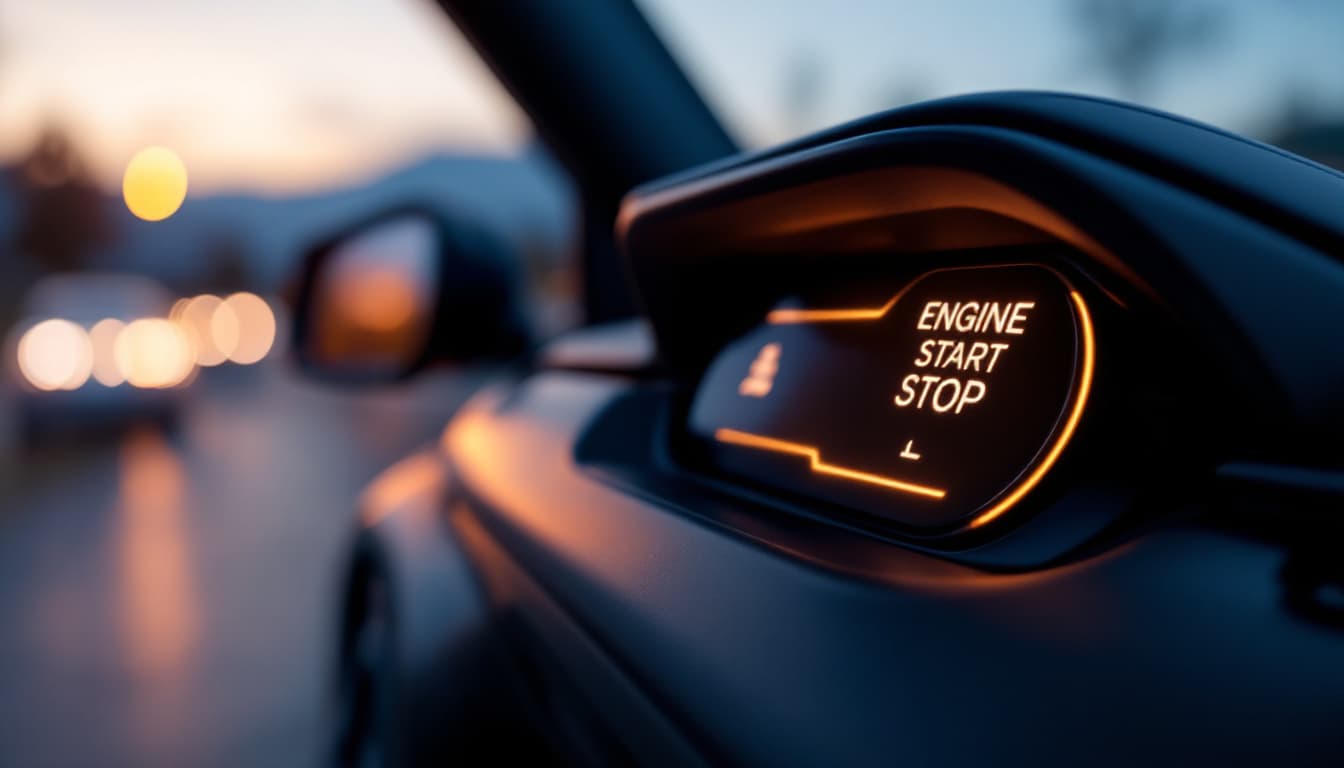
Lincoln Navigator & Aviator Push-Button Start Not Working in Southlake TX
Push-button start problems on a Lincoln Navigator or Aviator in Southlake TX — key detection, module faults, and what actually fixes a no-start. (972) 573-7978.
You press the button. Something on the dash says the key is not detected, or nothing happens at all, or the engine cranks and dies. On a Navigator or Aviator this is rarely one fault with one fix — push-button start is a chain of checks, and the failure point determines whether you are looking at a ten-dollar battery or a module. Southlake TX Locksmiths diagnoses and repairs Lincoln start faults on site. Call or text (972) 573-7978.
Quick Answer
Push-button start problems fall into four buckets, in rough order of how often we find them: a dead or weak fob battery, a low vehicle battery, a key detection fault (antenna, receiver or a fob that has lost its programming), and a module or immobilizer fault.
The single most useful diagnostic you can run yourself takes thirty seconds: use the backup start method. On most recent Lincolns that means holding the fob directly against the start button and pressing. If the engine starts that way, the fob's battery or its long-range transmission is the problem, not the vehicle. If it still refuses, the fault is deeper — in detection, authorization, or a module.
Lincoln Start Fault Pricing in Southlake
| Service | Price Range |
|---|---|
| Fob battery replacement and function test | $25–$60 |
| No-start diagnosis, push-button system | $95–$185 |
| Smart key replacement and programming | $290–$520 |
| All keys lost, Navigator / Aviator | $420–$780 |
| Key detection antenna / receiver diagnosis | $120–$240 |
| Immobilizer or module programming | $280–$650 |
Estimates only. Diagnosis comes first on any no-start, because several of these faults look identical from the driver's seat and only one of them is cheap. We confirm the total before work begins.
The chain of checks behind one button press
Understanding what happens in the second after you press the button makes the diagnosis obvious rather than mysterious.
First, the vehicle must be awake and powered. Door opened, brake pressed, systems energized. A weak 12-volt battery breaks this stage before anything else happens, which is why a marginal battery produces symptoms that look nothing like a battery problem.
Second, the vehicle must detect the fob inside the cabin. Interior antennas transmit a low-frequency wake signal; the fob answers. If the fob is asleep, dead, shielded or out of range, detection fails and you get a key-not-detected message.
Third, the detected fob must be authorized — its credential checked against the vehicle's list of registered keys.
Fourth, with authorization granted, the immobilizer permits fuel and spark and the starter is commanded.
Break stage two and you get "no key detected." Break stage three and you may get a crank that dies immediately, because the engine started and then authorization was withdrawn. Break stage four and you crank forever with nothing happening. The symptom tells us where to look, which is why we ask precise questions on the phone.
Fob battery: the cheapest and most common cause
Lincoln smart fobs use a coin cell that degrades gradually. The pattern is recognizable: first you need to stand closer to unlock. Then remote start stops working reliably. Then one morning the vehicle does not see the fob at all.
Replace it with a fresh cell from a package you just opened. Coin cells sitting loose in a drawer for two years are often already flat. If a new cell fixes it, you have your answer and you have spent almost nothing.
One caution worth stating: a fob that has been wet behaves like a fob with a weak battery, and a new cell will not fix corrosion on the board. If yours has been through a wash, a pool or a Texas downpour, read our note on water-damaged key fobs before spending money on batteries.
Vehicle battery: the fault that hides as everything else
This is the one owners most often skip, and it produces the widest range of misleading symptoms.
A 12-volt battery can read close to full voltage at rest and still collapse under crank load. When it sags, modules brown out. The body control module drops offline mid-handshake. The instrument cluster throws warnings that have nothing to do with the actual fault. On a Navigator with substantial electrical load, this happens earlier than you would expect.
Symptoms that point at the vehicle battery rather than the key: multiple unrelated warning lights appearing at once, a dash that flickers during the start attempt, the vehicle behaving fine after a jump, or intermittent faults that cluster on cold mornings.
Test it under load, not at rest. If it is weak, replace it and retest before anyone diagnoses a module. We have been called out for module faults that were batteries more than once, and telling you that honestly is cheaper for you than being right expensively.
Key detection faults
When the battery is good in both fob and vehicle, and the backup start method also fails, the detection or authorization layer is the suspect.
Fob deprogrammed. Uncommon but real. A fob can lose its registration after certain electrical events or module replacements. It reprograms in minutes if the vehicle is otherwise healthy.
Interior antenna fault. The vehicle transmits the wake signal through antennas in the cabin. A failed antenna creates dead zones — the fob works in one seat position and not another, which is a very specific and very diagnostic symptom. If your Navigator sees the key when it is on the console but not in your pocket, say so; it narrows things immediately.
Receiver module fault. The module that hears the fob's reply can fail outright. Then no fob is detected anywhere, including a known-good spare.
This is exactly why we ask you to try a second key if you have one. A spare that works proves the vehicle is fine and the first fob is the problem. A spare that also fails points at the vehicle. That one test saves more diagnostic time than any tool.
Module and immobilizer faults
At the deep end, the problem is authorization itself. The vehicle detects a fob, agrees it exists, and still refuses to run.
These cases usually announce themselves with a security or immobilizer indicator behaving unusually — flashing rapidly, staying solid, or lighting at a time it normally would not. The engine may fire for half a second and shut down, which is the fingerprint of authorization being withdrawn after start.
Causes include a failed body control module, corrupted immobilizer data after a battery or module event, or a module that has been replaced without proper programming. Aftermarket remote start systems are a frequent contributor here; they tap into exactly the circuits that matter and their failures mimic factory faults closely. Our guide to remote start and immobilizer conflicts covers what to check when an aftermarket system is in the picture, and our broader walkthrough of push-button start no-start module diagnosis applies across makes.
What to do right now, in order
If you are standing next to a Lincoln that will not start, work this list before calling anyone.
- Try the backup start position — fob held against the start button, brake pressed, press to start. Check your owner's manual for the exact location on your model year.
- Try your spare key if you have one. This single test splits the problem in half.
- Look at the dash. Note the exact wording of any message and the behavior of the security light. Take a photo — it genuinely helps us diagnose over the phone.
- Check whether accessories are strong. Bright headlights and a firm dash usually mean the battery is not the issue; dim and flickering means it probably is.
- Note whether the engine cranks. Cranking and not firing is a different problem than not cranking at all, and it changes what we bring.
Then call. Tell us what happened at each of those steps and we will arrive with the right equipment rather than diagnosing twice.
Frequently Asked Questions
Why does my Lincoln say "key not detected" when the key is right there? Most often a weak fob battery — detection is the first thing to degrade. Less often, an interior antenna or receiver fault means the vehicle genuinely cannot hear the fob. Holding the fob against the start button bypasses the long-range detection and tells you which it is.
My Navigator starts and immediately shuts off. What is that? That pattern usually means the engine started and authorization was then withdrawn — an immobilizer or module issue rather than a mechanical one. It also shows up with aftermarket remote start systems that interrupt the wrong circuit.
Can a bad car battery cause push-button start problems? Yes, and it is the most under-diagnosed cause. Modules brown out during crank and drop offline mid-handshake, producing key-detection and security faults that have nothing to do with your key. Always load-test the battery before paying for module diagnosis.
Will a new fob fix my no-start? Only if the fob is the fault. If a known-good spare also fails to start the vehicle, a new fob will not help — the problem is in the vehicle. This is why we diagnose before selling a key.
How much does a Lincoln smart key cost in Southlake? A programmed spare typically runs $290–$520 depending on model year and fob type. All keys lost runs higher, generally $420–$780, because the authorized key list has to be rebuilt from scratch.
Do you come to me, or does the vehicle need to be towed? We come to you. A push-button start fault leaves the vehicle immobile, which is precisely the situation mobile service exists for — Southlake, Colleyville, Keller, Grapevine, Westlake and Trophy Club.
Lincoln Navigator or Aviator that will not start in Southlake? Call or text (972) 573-7978 with what the dash is telling you and whether a spare key behaves the same. We will tell you what it likely is before we roll.
Written by the Southlaketxlocksmiths Automotive Locksmith Team — mobile automotive key, immobilizer and module diagnosis across Southlake TX 76092 and the surrounding communities.