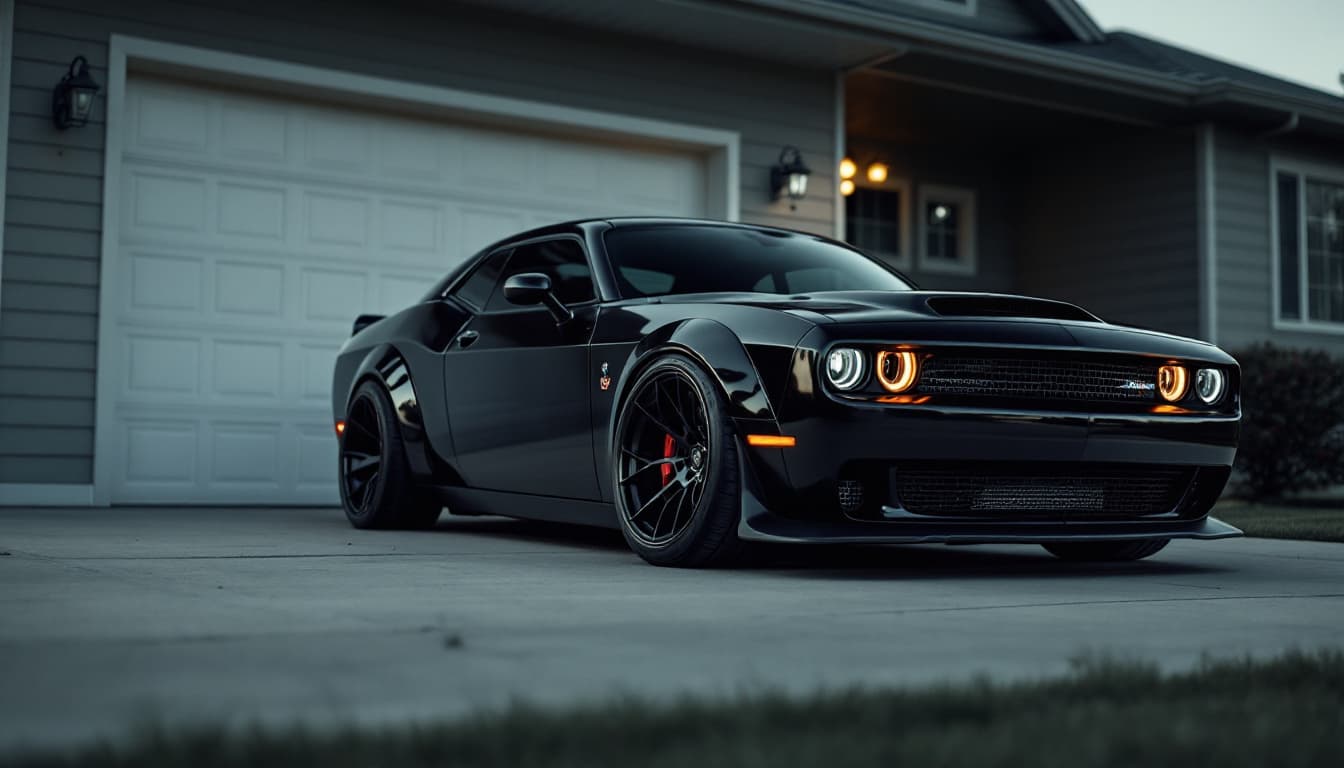
Dodge Charger and Challenger Key Replacement in Southlake TX
Dodge Charger and Challenger key replacement in Southlake TX — FOBIK versus proximity smart keys, the SKREEM and RF hub lineage, and what each generation costs. Call (972) 573-7978.
Charger and Challenger owners get quoted wildly different prices for what sounds like the same job, and there is a real reason for it. These cars ran on one platform for well over a decade, and across that run the key went from a plug-in FOBIK to a proximity smart key, while the module holding the immobilizer moved and changed names more than once. What your car needs depends on which side of 2015 it sits. Southlake TX Locksmiths covers both. Call or text (972) 573-7978 with your VIN.
Quick Answer
The 2011 to 2014 Charger and Challenger use a FOBIK — a fob-integrated key that physically inserts into a dash-mounted receptacle and twists like a key. Those run $220 to $380.
The 2015 and later cars moved to a proximity smart key with push-button start on most configurations, at $280 to $500. All-keys-lost on either generation is $420 to $750, because the authorized key list has to be rebuilt from scratch rather than appended to. Diagnosis to separate a key fault from a module fault is $95 to $185, and it is worth doing before you buy anything.
Dodge Charger and Challenger Key Pricing in Southlake
| Service | Price Range |
|---|---|
| FOBIK key (2011–2014) | $220–$380 |
| Proximity smart key (2015 onward) | $280–$500 |
| All keys lost | $420–$750 |
| Emergency blade cutting only | $75–$140 |
| Immobilizer or RF hub diagnosis | $95–$185 |
Ranges only, confirmed before work starts. Model year, key type, and whether a working key exists determine where in the range you land.
The key formats, and why they are not interchangeable
FOBIK, roughly 2011 to 2014. Short for fob-integrated key. It looks like a fob because it is one — the remote functions live in the same plastic body — but it also carries a transponder and physically inserts into a receptacle in the dash, which you then twist. There is a separate flat emergency blade that slides out of the housing for the door locks. FOBIKs are the cheaper key of the two, and they are also the ones most often mistaken for proximity keys by parts counters, which leads to the wrong part being ordered.
Proximity smart key, 2015 onward. Stays in your pocket. Passive entry at the doors, push-button start. There is still a mechanical emergency blade inside the fob body, and it still only opens the door — it will never start the car. Owners discover this at the worst possible time, which is the entire argument for a real second key rather than relying on the blade.
Emergency blade alone. Not a key in the electronic sense at all. Useful, cheap, and no substitute for a programmed key.
A FOBIK cannot be programmed to a proximity car and vice versa, no matter how similar the housings look. Sending the VIN is the only reliable way to get the right part on the first attempt.
SKREEM, SKIM and the RF hub — the lineage
Chrysler's immobilizer has carried several names over the years, and the terminology confuses even people in the trade. Understanding the lineage explains why the diagnosis differs by year.
SKIM — Sentry Key Immobilizer Module — was the original standalone immobilizer box on older Chrysler, Dodge and Jeep vehicles. It read the transponder in the key head through a coil around the ignition and released the engine controller.
SKREEM — Sentry Key Remote Entry Module — merged that function with the remote keyless entry receiver, so one module handled both the immobilizer and the remote fob. This is the name most commonly attached to the FOBIK-era cars.
The RF hub is the modern descendant. On the later cars the radio-frequency receiver, the passive entry antennas and the immobilizer authority are handled through a hub module that sits on the vehicle network alongside the body controller. On these later vehicles a security gateway also mediates access to the network, which is a genuine architectural change rather than a naming one — our note on security gateway module programming covers what that means in practice.
The practical translation: the same complaint has different causes on a 2013 and a 2019. On the earlier car, a failed remote and a failed immobilizer point to the same module. On the later car, they may not.
PIN and secret key access
This is the part that separates shops that can do the work from shops that cannot.
Every one of these vehicles stores a security value — commonly called the PIN or the secret key depending on the era — that has to be presented before the vehicle will accept a new key into its authorized list. It is not printed anywhere you have access to. It is not on your registration, it is not in the glovebox, and it is not something a customer supplies.
On the FOBIK-era cars that value is retrieved through the vehicle in a fairly established way. On the later cars, with the security gateway in the path, access is more controlled and the procedure differs by model year. That control is the reason quotes vary between shops: some can get there on your specific year and some cannot.
The useful question to ask anyone you call, including us, is not "do you do Dodges." It is "have you done a 2019 Charger" — with the model and year said out loud. That one question saves a wasted appointment.
All keys lost versus adding a spare
The price gap here is not an emergency surcharge. It is a different procedure.
With one working key, the car can authorize a programming session using the credential it already trusts. The new key is appended to the existing authorized list, and everything already on that list stays on it. Fast and comparatively cheap.
With no working key, the authorized list is rebuilt from nothing. That has a consequence worth stating plainly: any key not physically present at the appointment stops working. After a theft that is exactly the behavior you want. After a genuine loss it means the spare in a kitchen drawer at your parents' house becomes scrap unless it is at the appointment.
Bring every key you own, including ones you believe are dead. A key with a flat coin cell is still a key the vehicle can be told to trust.
The general shape of that work across other makes is in our guide to all keys lost and VIN key programming.
What the appointment involves
We come to the car — a driveway in Southlake 76092, a lot in Grapevine, wherever it is sitting. On all-keys-lost that matters most, because a car with no keys cannot be driven to anyone, and a dealer visit would begin with a tow before any key work started.
Ownership verification first. Registration, title or an insurance card showing the VIN, plus a photo ID that matches the name on it. Adding a key to a vehicle's authorized list is precisely the capability a thief wants. Any shop willing to skip this is telling you how it operates. If the car is titled to a company, or you are not the titled owner, call ahead so authorization can be sorted before dispatch.
VIN and system survey. We confirm which key format the car expects, which module holds the immobilizer authority on that model year, and whether any existing key is readable. This is also where a genuine module fault gets separated from a key fault — two very different repairs at very different prices.
Blade cutting. The emergency blade or FOBIK blade is cut to the vehicle, normally by decoding the existing door lock rather than relying on a database entry that may not reflect a previously replaced cylinder.
Immobilizer work. The security value is retrieved, the new credential is written into the authorized list, and cross-references are left intact.
Full function verification. Start, lock, unlock, panic, trunk release, and on proximity cars both passive entry at each door and passive start. A key that starts the engine but will not unlock a door passively is not a finished job.
Typical time on site is under an hour for a spare on a FOBIK car, and one to two hours for a proximity key or an all-keys-lost job.
When the problem is not the key at all
A real share of the calls we get for "key problems" on these cars turn out to be something else. Worth ruling out before buying anything.
A weak 12-volt battery. Voltage sags during crank, modules drop offline mid-handshake, and the car refuses to authorize a perfectly good key. From the driver's seat this is indistinguishable from an immobilizer failure. Charge and retest first — this is the single most common false diagnosis in the category.
A dead fob coin cell. Remote function dies first, passive start second. On a proximity car, holding the fob against the marked spot on the column or console usually still starts the engine. If that works, the immobilizer is fine and the fob's radio is the only thing that failed.
Water intrusion in the fob. A fob that has been through a wash cycle or a pool commonly works intermittently for weeks before quitting for good. Our note on water-damaged key fobs covers whether yours is worth saving.
A module or hub fault. A failing RF hub or body controller produces symptoms indistinguishable from a key problem without diagnosis. That is why we diagnose before we sell.
If your vehicle is a Pacifica or Voyager rather than a Charger or Challenger, the RF hub behavior on those is covered specifically in our write-up on Pacifica and Voyager RF hub key programming. For the broader FOBIK picture across Chrysler, Dodge, Jeep and Ram, see our FOBIK key overview. And if you want to understand why one key costs $220 and another costs $500 on cars that look similar, what actually drives transponder key pricing breaks it down.
Frequently Asked Questions
What is the difference between a FOBIK and a proximity key on a Charger? A FOBIK is a fob-integrated key used roughly from 2011 to 2014 that physically inserts into a dash receptacle and twists. A proximity smart key, used from 2015 onward on most configurations, stays in your pocket and works with push-button start. They are not interchangeable, so the model year has to be confirmed before ordering a part.
Do I need to give you a PIN or security code for my Dodge? No. The security value the vehicle requires is not something an owner has access to or can look up. It is retrieved through the vehicle as part of the programming work, and the procedure differs depending on the model year.
Will my spare key still work after an all-keys-lost job? Only if it is physically present at the appointment. The authorized key list is rebuilt from scratch, so a key sitting somewhere else is deauthorized. Bring every key you own, including ones with dead batteries.
Can you make a Dodge key if the car will not start at all? Yes, and that is exactly when mobile service is worth the most. A car with no working key cannot be driven, so a dealer visit starts with a tow. We come to the vehicle in Southlake, Colleyville, Keller, Grapevine, Westlake or Trophy Club instead.
Why did my Charger stop recognizing both fobs at the same time? When every key fails simultaneously the common element is the vehicle, not the credentials. Start with a load test on the 12-volt battery, because low voltage produces this exact symptom. If the battery is healthy, the RF hub or the body controller becomes the likely cause and that is a diagnostic job rather than a key purchase.
How long does a Challenger key take to program? A spare on a FOBIK-era car is usually under an hour on site. A proximity key or an all-keys-lost job commonly runs one to two hours, depending on the model year and how the security value has to be retrieved.
Need a Charger or Challenger key replaced in Southlake, Colleyville, Keller, Grapevine, Westlake or Trophy Club? Text your VIN and model year to (972) 573-7978 and we will confirm whether your car takes a FOBIK or a proximity key, and what it costs, before anyone drives out.
Written by the Southlaketxlocksmiths Automotive Locksmith Team — mobile automotive key and module programming across Southlake TX 76092 and the surrounding communities.