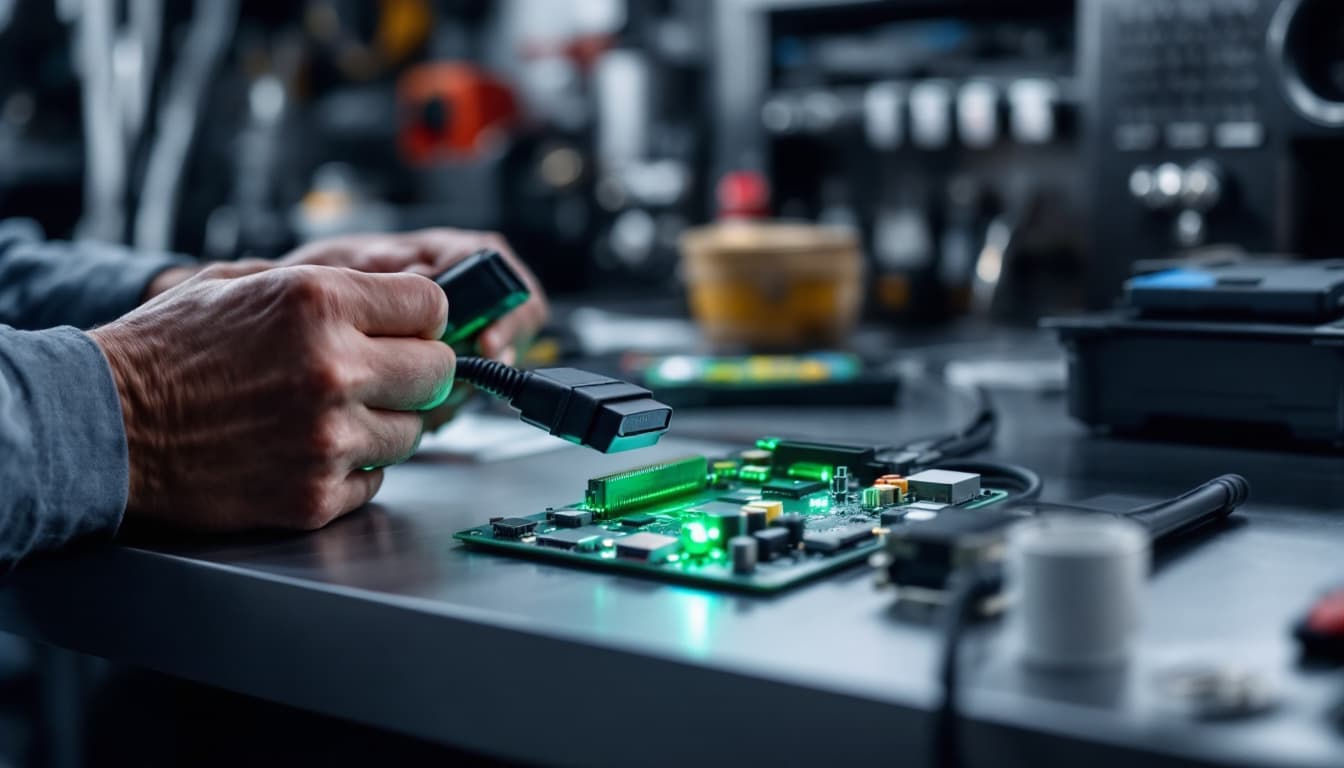
Car Computer & Module Programming Southlake: ECU, ECM, PCM, BCM & TCM
Mobile car computer and module programming in Southlake TX — ECU, ECM, PCM, BCM, TCM flashing, cloning and VIN-write. Call or text (972) 573-7978 today.
Car Computer & Module Programming Southlake: ECU, ECM, PCM, BCM & TCM
Modern vehicles are rolling computer networks, and when one of those computers stops talking to the rest of the car, the symptoms can look like a dozen unrelated problems at once. Whether you have a replacement module that needs to be married to your VIN or an immobilizer computer that has lost its memory of your keys, Southlake TX Locksmiths brings the diagnostic and programming equipment to your driveway. Call or text (972) 573-7978 for mobile car computer and module programming across Southlake, Colleyville, Keller, Grapevine, Westlake, Trophy Club and Roanoke.
Quick Answer
Car computer or module programming is the process of loading the correct software and vehicle-specific data onto an electronic control unit so it works with your exact car. The most common modules a mobile automotive locksmith touches are the ones tied to security and key operation — the ECU/ECM, the BCM, and immobilizer control units — because those must recognize your keys before the engine will crank.
Programming can mean several things: flashing new firmware, writing your VIN into a fresh module, cloning the data from an old computer onto a new one, or performing an immobilizer relearn so the car accepts a new key. Some of this is done on the vehicle through the OBD-II port; some requires bench work with the module removed. A qualified locksmith handles the key, immobilizer and security side, while a dealer or specialty tech is required for certain powertrain flashes that need a factory subscription.
If your car won't start after a module was replaced, throws immobilizer or anti-theft warnings, or lost all keys, module programming is usually the missing step. Prices depend on the module type, whether cloning is possible, and your year and make.
Car Computer & Module Programming Pricing
| Service / Scenario | Price Range |
|---|---|
| Immobilizer / key module relearn (with new key) | $150–$375 |
| ECU/ECM immobilizer sync (add key or all-keys-lost) | $200–$500 |
| Module cloning (old unit to replacement) | $250–$600 |
| VIN-write to virgin module (BCM/immobilizer) | $250–$650 |
| Push-to-start smart system reprogram | $250–$550 |
| Diagnostic-only visit (applied to work if you proceed) | $75–$150 |
Ranges are estimates. Your final price depends on the year, make and model, how many keys are on hand, whether the module can be cloned versus VIN-written from scratch, and your location within the DFW northeast. We confirm the number before any work begins.
What each module actually does
The alphabet soup under your dash and hood each has a specific job. Understanding the difference helps you describe the problem accurately when you call.
- ECU (Engine Control Unit) is the umbrella term for the computer that manages engine operation. On many vehicles the ECU also stores immobilizer data that must match the transponder in your key.
- ECM (Engine Control Module) is often used interchangeably with ECU. It governs fuel, ignition timing and emissions. When an ECM is replaced, the security data frequently needs to be re-synced so the car will start.
- PCM (Powertrain Control Module) combines engine and transmission control in one housing. A replacement PCM is a common flash-and-relearn job, and on security-equipped vehicles it participates in the immobilizer handshake.
- BCM (Body Control Module) runs the "body" electronics — locks, lights, wipers, and on many cars the immobilizer and keyless entry. A failing BCM can cause no-start, dead fobs, or phantom electrical gremlins.
- TCM (Transmission Control Module) manages shifting. It rarely touches the key system but sometimes needs adaptive relearns after replacement.
For key and no-start problems, the ECU/ECM and BCM are the units that matter most because they hold the codes that authorize your transponder.
Flashing, cloning and VIN-writing — the three paths
When a module is replaced, there are three ways to make the new unit work.
Flashing loads updated software onto a module. Manufacturers release calibration updates to fix driveability or emissions behavior, and a new module sometimes ships with generic software that has to be flashed to your car's specification. Certain powertrain flashes require a factory-licensed subscription — that portion belongs at a dealer or a shop with that access.
Cloning copies the data — including the immobilizer codes — from your original module onto a compatible replacement. When cloning is possible it is the cleanest path because the car sees the new unit as the original and your existing keys keep working, often avoiding a full relearn.
VIN-writing takes a "virgin" module that has never been assigned to a car and writes your VIN and security data into it. This is common with BCMs and immobilizer units. After VIN-writing, keys usually have to be re-registered to the new module.
We evaluate which path your vehicle supports before quoting, because the method drives both the time and the price.
On-car versus bench programming
Most immobilizer and key work happens on the car through the OBD-II diagnostic port under the dash. Our programmers communicate with the modules, read security data where permitted, and register new keys without removing anything.
Some jobs require bench programming — physically removing the module, opening it, and reading or writing the memory chip (EEPROM) directly on a workbench. Bench work is typical when a module is locked, when the car has no working keys and the security gateway blocks OBD access, or when cloning requires a direct chip read. Bench programming takes longer and involves careful disassembly, which is reflected in the price. As a mobile service, we can perform many bench procedures right at your location.
Why a mobile automotive locksmith handles immobilizer and key modules
The immobilizer is a theft-deterrent system that will not let the engine run unless it recognizes an authorized transponder. Programming keys, syncing the immobilizer after a module swap, and recovering an all-keys-lost vehicle are core locksmith work — it is exactly the intersection of mechanical key cutting and electronic security that defines the trade. Vehicle key programming is tracked through the industry's registry, the NASTF Vehicle Security Professional (VSP) system, which exists to keep secure key and immobilizer data in trained hands.
Coming to you also solves a practical problem: a car that won't start can't be driven to a shop. Mobile module and key programming means the equipment arrives at your home or workplace in Southlake instead of the vehicle needing a tow.
When a dealer or specialty technician is required
Honesty matters here. A locksmith is the right call for keys, immobilizer sync, BCM key registration and many clone jobs. But some work genuinely belongs elsewhere:
- Powertrain flashes that need a live factory subscription and current calibration files.
- Advanced driver-assistance (ADAS) module calibrations that require targets and alignment equipment.
- Warranty-covered module replacements your dealer will do at no cost.
- Rare or brand-new platforms where aftermarket tools do not yet have coverage.
If your situation falls into one of these, we will tell you plainly rather than attempt work that should be done with factory tooling. For key and security questions specifically, see our guides on all-keys-lost VIN programming and PCM/ECM replacement and VIN programming.
Signs your car needs module programming
Watch for these clues that point toward a programming step rather than a mechanical repair:
- The engine cranks but will not start, and a security or immobilizer light is flashing.
- You replaced a module yourself and now nothing responds correctly.
- All keys were lost and a new key alone won't start the car.
- The dash shows communication faults across several systems at once.
- Keyless entry and push-to-start stopped working after a battery disconnect or module swap.
Describe these symptoms when you call so we bring the right tools. If your issue is a dead or unresponsive fob rather than a computer, our guide on a key fob that stopped working may help first.
Frequently Asked Questions
What is the difference between ECU, ECM and PCM?
ECU is a general term for an engine computer; ECM specifically refers to the engine control module; and PCM is a combined powertrain module that controls both engine and transmission. In everyday conversation the terms overlap. For key and no-start issues, what matters is whether the unit stores your immobilizer data.
Can you program a module that was replaced by another shop?
Often yes. If a mechanic installed a replacement ECM, BCM or immobilizer unit and the car won't start or won't accept keys, we can perform the VIN-write, cloning or immobilizer relearn needed to bring it online, provided the module and platform are covered by our tools.
Does module programming erase my other settings?
Programming targets specific data. Cloning preserves your existing configuration by copying it forward. VIN-writing a virgin module may require re-registering keys and occasionally re-entering certain adaptations, which we handle as part of the job.
Do I need to bring the car to a dealer?
Not for most immobilizer, key and body-module work — that comes to your driveway. You only need a dealer or specialty tech for factory-subscription powertrain flashes, ADAS calibrations, or warranty replacements. We will tell you honestly which category your vehicle falls into.
How long does module programming take?
On-car immobilizer and key programming is often 30 to 90 minutes. Bench work, cloning and VIN-writing take longer because of module removal and chip-level reads. We give you a realistic time window when we confirm your quote.
Is proof of ownership required?
Yes. For any security, immobilizer or all-keys-lost work we verify that you own the vehicle — typically a photo ID matching the registration or title. This protects you and is standard practice for secure key and module work.
Your car's computers should be quietly doing their jobs, not leaving you stranded in the driveway. If you have a replacement module that needs programming, an immobilizer that won't recognize your keys, or a no-start you suspect is electronic, get a straight answer from a mobile automotive locksmith who works on these systems every day. Call or text (972) 573-7978 and Southlake TX Locksmiths will come to you anywhere across Southlake and the DFW northeast.
Written by the Southlake TX Locksmiths Automotive Locksmith Team — mobile automotive locksmith service across Southlake, Colleyville, Keller, Grapevine, Westlake and the DFW northeast.