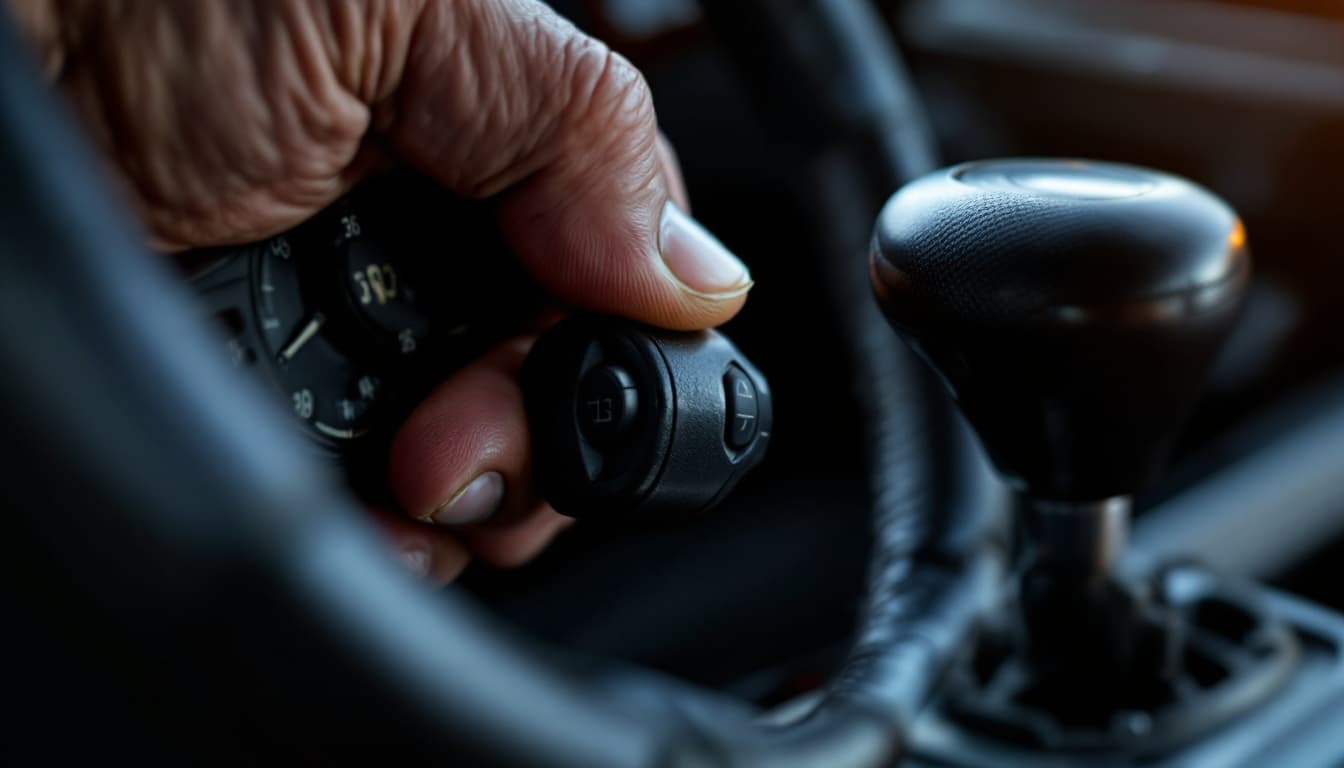
Key Stuck in Ignition Southlake — Fast Fix
Key won't turn? We diagnose and repair ignition lock issues same-day. Call (972) 573-7978 for immediate help in Southlake.
The key will not come out. You are parked, the engine is off, and the key sits in the cylinder refusing to turn back to the release position — or it turns and still will not withdraw. On the Enclave and Acadia there are three separate causes for this, and only one of them requires replacing a part. Southlake TX Locksmiths repairs GM ignition cylinders on site. Call or text (972) 573-7978.
Quick Answer
A key stuck in the ignition of a Buick Enclave or GMC Acadia is almost always one of three things.
The shift interlock has not released. These vehicles will not surrender the key unless the transmission is fully in Park. If the shifter is a hair short of the detent, or the interlock solenoid is not releasing, the key is mechanically held. This costs nothing to check and resolves a large share of calls.
The lock cylinder wafers are worn. After years of use, worn wafers and a worn key blade no longer align properly, and the cylinder will not return to the position that releases the key. This is the most common mechanical cause on higher-mileage examples.
Something is jammed in the cylinder — debris, a broken key fragment, or a bent wafer.
Expect $45–$120 for a stuck-key extraction where the cylinder is serviceable, and $220–$480 for lock cylinder replacement with a key cut to match.
Ignition Repair Pricing in Southlake
| Service | Price Range |
|---|---|
| Stuck key extraction, no cylinder damage | $45–$120 |
| Ignition cylinder diagnosis | $75–$150 |
| Lock cylinder rebuild / rekey to existing key | $180–$360 |
| Ignition lock cylinder replacement | $220–$480 |
| New key cut and programmed after cylinder work | $130–$290 |
| Broken key extraction from cylinder | $85–$180 |
Ranges only. Model year, whether the column has to be partially disassembled, and whether the new cylinder is keyed to your existing key all move the number. We confirm the total on site before starting.
Start with the free checks
Before anyone charges you for anything, run these. They cost nothing and they resolve a real percentage of stuck keys.
Push the shifter firmly into Park. Not near Park — into it. Rock it forward against the stop. On a vehicle sitting on any kind of slope, the parking pawl can be loaded enough that the shifter has not fully seated. Set the parking brake first, then let the vehicle settle, then try Park again.
Rock the steering wheel gently while turning the key. The steering lock engages when the wheel is turned after shutdown, and it binds against the cylinder. Light pressure left and right while easing the key counterclockwise releases it more often than people expect. Do not force it — force is how a $60 extraction becomes a $400 cylinder.
Check the brake lights. This one is not obvious. On many GM vehicles the shift interlock is tied to the brake switch circuit. If your brake lights have stopped working, the interlock may not be receiving the signal it needs to release. A blown fuse or failed brake switch shows up as a stuck key, and the diagnostic tell is that the brake lights are also dead.
Verify the vehicle is fully off. An accessory position that has not cleared holds the key. Confirm the cluster is dark.
If all four fail, the fault is mechanical or electrical inside the column, and it is time to call.
Why worn wafers cause this specifically
An ignition cylinder is a stack of spring-loaded wafers. The correct key pushes each wafer to a precise height so they all clear the shear line, letting the cylinder rotate. Rotation through the full arc — Off, Accessory, Run, Start, and back — is what allows the key to be withdrawn only at Off.
Two kinds of wear compound over the years. The key blade wears down, so it no longer pushes wafers quite as high. The wafers and springs wear, so they no longer return crisply. Individually either is tolerable. Together they produce a cylinder that will rotate under moderate force but will not return cleanly to the release position — and the key stays in.
The recognizable warning sign is that this does not appear overnight. For weeks or months beforehand, the key needs jiggling. It sticks briefly and then frees. Owners adapt to it without registering that it is a failing part. If you are jiggling your key to start your Enclave, the cylinder is telling you what comes next.
Worth noting: if your key has become worn enough to cause this, a freshly cut key alone sometimes restores normal operation — cheaper than a cylinder, and worth testing first. We check that before recommending replacement, because replacing a serviceable cylinder is money you did not need to spend.
When the cylinder does need replacing
If the cylinder is genuinely worn out, damaged, or has a broken internal component, replacement is the fix. The job runs like this on an Enclave or Acadia.
The steering column shrouds come off to expose the cylinder housing. The cylinder is released — the method varies by year, and on some it requires the key at a specific position, which is one reason a fully seized cylinder is more work than a merely sticky one. The replacement goes in and gets keyed.
That last part is the decision worth understanding. There are two options:
Key the new cylinder to your existing key. The cylinder is rebuilt with wafers matched to the key you already carry. You keep one key for doors and ignition. This is what most owners want, and it avoids reprogramming.
Use a new cylinder with its own key. Faster, but now you carry two different keys, or you rekey the doors to match. Whether the transponder programming carries over depends on your model year and whether the transponder lives in the key or the fob.
We ask which you prefer before we start, because it changes the parts and the price.
The transponder question
On these vehicles, ignition and immobilizer are related but separate systems. The cylinder is mechanical: wafers and rotation. The immobilizer is electronic: it checks a credential before permitting the engine to run.
Replacing a cylinder does not, by itself, break the immobilizer relationship — if your existing key still carries its authorized transponder, programming is not needed. But if the job also produces a new key, that key needs to be programmed. It will turn the cylinder and crank the engine, and the engine will not run until the credential is registered.
This is where the "cheap key from the hardware store" story usually ends badly. A blade cut to match will physically operate the cylinder and start nothing. Our note on laser-cut versus standard car keys explains what each type can and cannot do.
If your vehicle is a related GM SUV, the same column architecture and the same failure pattern turn up across the family — our write-up on Chevrolet Equinox and Traverse ignition repair covers the sibling platforms.
What not to do
Some things reliably make this worse and more expensive.
Do not force the key with pliers. The blade will snap, and now you have a broken fragment inside a cylinder that was already faulty. Extraction is a separate job with its own price.
Do not spray lubricant into the cylinder. Oil-based sprays attract dust, which turns into a paste that binds wafers permanently. If a lock lubricant is warranted, it is a dry graphite or PTFE product, applied sparingly — and if the cylinder is already worn, lubricant only delays the diagnosis.
Do not leave the vehicle unlocked with the key in it. A key stuck in the ignition is an unlocked vehicle with a key visible from outside. Lock the doors manually with a spare or your remote and stay with the vehicle if you can.
Do not have the column taken apart by someone without the right key data. A cylinder removed without a plan for keying it leaves you with a vehicle that cannot be started at all.
Frequently Asked Questions
Why is my car key stuck in the ignition? Most commonly the transmission is not fully in Park and the shift interlock is holding the key, or the ignition lock cylinder's wafers are worn and will not return the cylinder to the release position. A jammed cylinder or broken key fragment accounts for the rest.
Can I get the key out myself? Often, yes. Push the shifter firmly into Park, set the parking brake, gently rock the steering wheel while easing the key counterclockwise, and confirm the vehicle is completely off. If the brake lights are also not working, a fuse or brake switch may be blocking the interlock release.
How much does it cost to fix a stuck ignition on a Buick Enclave? Extraction where the cylinder is still serviceable typically runs $45–$120. If the lock cylinder is worn out and needs replacing, expect $220–$480, plus key cutting and programming if a new key is produced.
Will a new key fix a sticky ignition? Sometimes. If the old key blade is worn and the cylinder is not, a freshly cut key restores proper wafer engagement. We test that before recommending a cylinder, because it is a substantially cheaper outcome when it works.
Does replacing the ignition cylinder mean reprogramming my key? Not necessarily. If your existing programmed key is retained and the new cylinder is keyed to match it, no programming is needed. If the job produces a new key, that key must be programmed before the engine will run.
Do you repair ignitions on site or does the vehicle need to go to a shop? Most ignition cylinder work is done on site — driveway, parking lot or workplace — across Southlake, Colleyville, Keller, Grapevine, Westlake and Trophy Club. Severe column damage is the exception.
Key stuck in the ignition of your Enclave or Acadia in Southlake? Call or text (972) 573-7978. Tell us whether the key jiggles free intermittently or is completely seized — that one detail changes what we bring.
Written by the Southlaketxlocksmiths Automotive Locksmith Team — mobile ignition repair, key cutting and programming across Southlake TX 76092 and the surrounding communities.