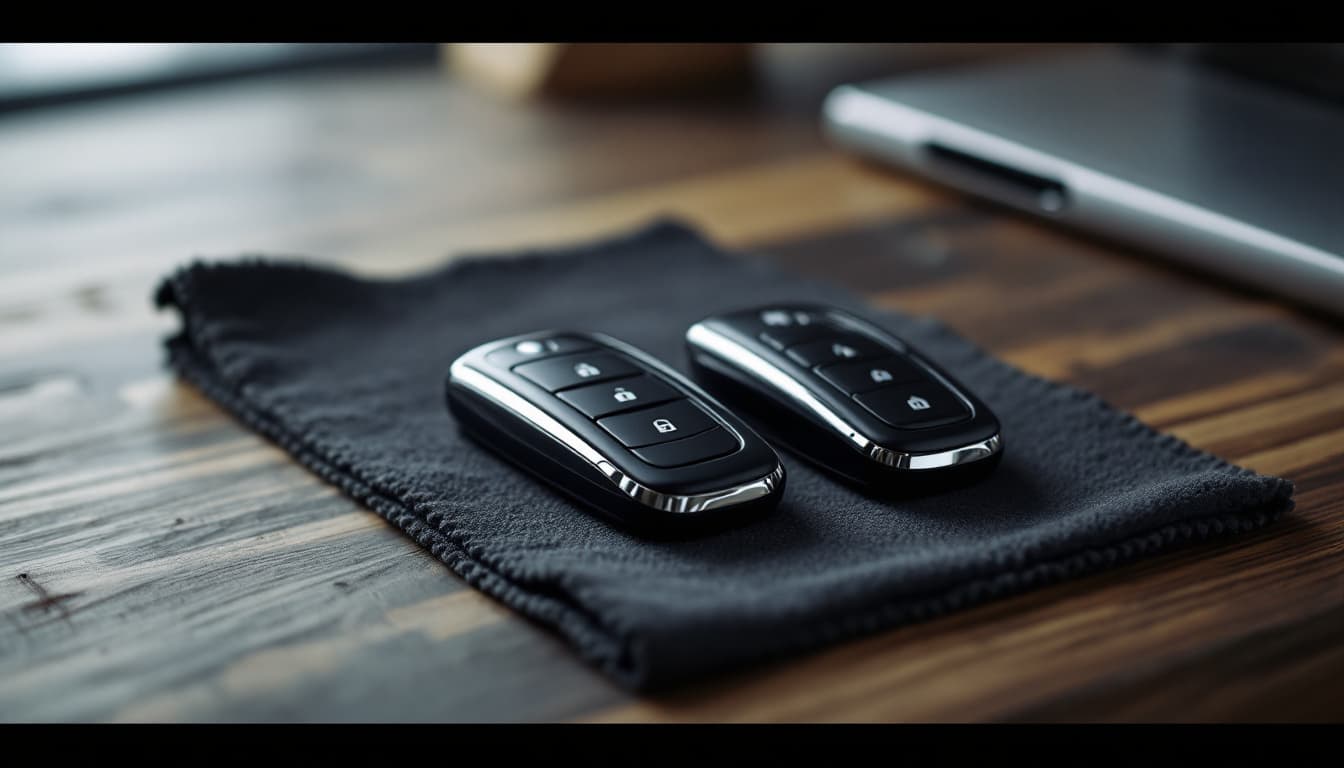
BMW X3 and X5 Spare Key Programming in Southlake TX: CAS4 and CAS4+ Explained
BMW X3 and X5 spare key programming in Southlake TX — how CAS3, CAS4 and FEM/BDC differ by model year, what a spare costs, and why waiting until all keys are lost triples the bill. Call (972) 573-7978.
Most people call us about a BMW key on the day the last one disappears. That is the expensive day. A spare cut and programmed while your existing key still works is a scheduled appointment at a predictable price. The same job with nothing to start the car is a different procedure with a different number attached. Southlake TX Locksmiths programs X3 and X5 keys on site — call or text (972) 573-7978 with your VIN and model year.
Quick Answer
BMW has used three distinct security architectures across the X3 and X5 model runs. CAS3 and CAS3+ cover the earlier cars, CAS4 and CAS4+ cover the middle years, and FEM/BDC covers the newer ones. Which one your SUV uses is decided by model year and body code, not by trim or badge.
For most X3 and X5 vehicles with comfort access, a spare smart key runs $340 to $620. All keys lost runs $500 to $900. An older CAS3-era bladed key with a remote head is cheaper, at $240 to $420. The gap between a spare and an all-keys-lost job is normally $250 or more, which is the entire argument for handling it before you have to.
BMW X3 and X5 Key Pricing in Southlake
| Service | Price Range |
|---|---|
| Spare smart key, X3 or X5 with comfort access | $340–$620 |
| All keys lost, X3 or X5 | $500–$900 |
| CAS3-era bladed spare key with remote head | $240–$420 |
| Emergency blade cutting only | $75–$140 |
| Immobilizer or no-start diagnosis | $95–$185 |
Ranges only, and confirmed before any work begins. Where you land depends on the security generation, whether the key is a proximity fob or a bladed remote head, and whether a working key exists.
The three BMW security generations, and where your SUV falls
This is the part that decides everything else, so it is worth getting right on the phone rather than in the driveway.
CAS3 and CAS3+ is the Car Access System used across the mid-2000s and early 2010s BMWs. Keys of this era are typically bladed — a metal blade sits in a plastic fob housing with lock, unlock and trunk buttons. Some cars of this era have comfort access as an option, which changes the fob but not the underlying architecture.
CAS4 and CAS4+ arrived with the F-series cars. The module handles vehicle access, immobilizer authorization and start authorization together. CAS4+ is a hardened revision of the same idea. Keys are usually proximity fobs with an emergency blade tucked into the body.
FEM/BDC replaced CAS entirely on later F-series and all G-series vehicles. The Front Electronic Module or Body Domain Controller absorbed the access function into a broader body controller. This is a genuinely different job from CAS work, and shops that comfortably handle CAS4 do not automatically handle FEM/BDC.
Which one is my X3?
The X3 F25 ran from roughly the 2011 model year to 2017 in the United States. Early F25 cars use CAS, and the later years of that run moved to FEM/BDC. Because the transition happened mid-generation, model year alone is not always decisive on an X3 — the VIN is.
The X3 G01 arrived for 2018 and is FEM/BDC throughout. If you are driving a 2018 or newer X3, you are on the newer architecture.
Which one is my X5?
The X5 E70 ran from about 2007 through 2013 and is CAS-era. The X5 F15 ran 2014 through 2018 and straddles the CAS4 and FEM/BDC boundary, so again the VIN settles it. The X5 G05 arrived for 2019 and is FEM/BDC.
If you are anywhere near one of those boundary years, text the VIN before you book. Two X5s a single model year apart can be different jobs at different prices, and knowing which one you have before dispatch is how you avoid a wasted appointment. Our broader write-up on BMW CAS, FEM and BDC key programming covers the architectures across the whole lineup rather than just the SUVs.
Comfort access keys versus bladed remote head keys
These are not two versions of the same part. They behave differently and they cost differently.
A comfort access proximity key never has to leave your pocket. The vehicle detects it within a defined range, unlocks on a door handle touch, and permits a push-button start. Inside the fob body there is a small mechanical emergency blade that opens the driver's door when the fob battery dies. That blade will not start the car. Owners discover this at the worst possible time, which is exactly why a real second key matters more than people expect.
A bladed remote head key is the older format. The metal blade turns in the ignition and the transponder inside the plastic head does the immobilizer handshake. Remote buttons handle locking. Simpler system, lower part cost, less programming labor — hence the lower price band.
On BMW the metal blade itself is normally a laser-cut, high-security profile rather than a simple edge-cut blank. If you want the mechanical side explained properly, see our note on how laser cut keys work.
Why a spare is dramatically cheaper than all-keys-lost
The difference is not a markup for urgency. It is a genuinely different procedure.
When one working key exists, the vehicle can authorize a programming session. The new key credential is added to an existing authorized list and everything else stays as it was. That is the fast path, and it is why a spare fits comfortably inside a normal appointment window.
With no working key, nothing can authorize anything. The authorized key list has to be rebuilt from the ground up. That means more time on site, more involved access to the security module, and one consequence people rarely anticipate — any key that is not physically present at the appointment stops working. That is correct security behavior after a theft or a genuine loss. It is also how a spare key sitting in a desk drawer at the office quietly becomes scrap.
On an X3 or X5 the practical gap between those two scenarios is commonly $250 to $400. If you own a BMW SUV and you have exactly one key, you are one lost keyring away from the expensive version of this article.
What the appointment actually looks like
We come to the vehicle. Driveway in Southlake, office lot in Westlake, a parking garage in Grapevine — wherever the SUV is sitting, which matters most when it cannot be driven.
Ownership verification comes first. Registration, title, or an insurance card showing the VIN, plus a photo ID matching that name. Programming a key to a vehicle is precisely the capability a thief wants. Any shop willing to skip that step is telling you something about how it operates.
VIN and system survey. We confirm the security generation, the key format the vehicle expects, and whether an existing key is readable. This is also where a real module fault gets separated from a key fault — different repairs, very different prices.
Blade cutting. The emergency blade or bladed key is cut to the vehicle, generally by decoding the existing lock rather than trusting a database entry that may not reflect a cylinder replaced years ago.
Immobilizer work. The new credential is written and cross-referenced. This is where the labor time goes, and where the security generation decides how long it takes.
Full function verification. Start, lock, unlock, panic, tailgate release, and on comfort access vehicles both passive entry and passive start. A key that cranks the engine but will not unlock the doors is not a finished job.
When the problem is not the key at all
A meaningful share of BMW no-start calls are not key problems. Worth ruling out before you buy hardware you did not need.
Weak or failing battery. Voltage sags during crank, modules drop offline mid-handshake, the car declines to authorize. From the driver's seat that is indistinguishable from an immobilizer failure. Charge and retest first.
Dead fob battery. Remote functions die first, passive start second. Most BMWs have a backup start position where the fob is held against a marked location on the column or console — the exact spot varies by model, so check the owner's manual.
Water intrusion. A fob that went through a wash cycle or a pool often works intermittently for weeks before quitting entirely. Our guide on how to fix a wet key fob covers whether yours is worth saving or whether you are better off replacing it.
Module faults. A failing CAS, FEM, BDC or body module produces a no-start that looks exactly like a key problem until it is diagnosed. That is why we diagnose before we sell.
If you drive a 5 Series or 7 Series rather than an SUV, the BMW 5 Series and 7 Series display key and spare key guide covers those sedans and the display key specifically.
Frequently Asked Questions
How do I know whether my X3 or X5 uses CAS4 or FEM/BDC? Model year gets you close and the VIN settles it. The X3 G01 from 2018 onward and the X5 G05 from 2019 onward are FEM/BDC. The F25 X3 and F15 X5 straddle the transition, so a VIN check is the only reliable way to know before dispatch.
Is a spare key really that much cheaper than replacing all keys? Yes. With a working key present the vehicle can authorize the session and the new key is simply added. With no key at all the authorized list is rebuilt from scratch, which takes longer and costs more. The difference is commonly $250 to $400 on these vehicles.
Will my old keys still work after an all-keys-lost job? No. Rebuilding the authorized list deauthorizes every key not physically present at the appointment. If a spare turns up in a coat pocket next month, it will not start the car.
Can you cut just the emergency blade so I can get into the SUV? Yes. Blade cutting alone runs $75 to $140 and gets you into the vehicle. It will not start the engine, because the blade carries no immobilizer credential. It is a door-access solution, not a key.
Do I have to bring the BMW anywhere? No. This is mobile work. We come to the vehicle in Southlake, Colleyville, Keller, Grapevine, Westlake or Trophy Club, which matters most when the SUV cannot be driven.
What paperwork do you need? Proof the vehicle is yours — registration, title or an insurance card showing the VIN — plus a photo ID matching that name. For company vehicles, or when the driver is not the titled owner, call ahead so authorization can be arranged before anyone is dispatched.
Need a BMW X3 or X5 spare key programmed in Southlake, Colleyville, Keller, Grapevine, Westlake or Trophy Club? Text your VIN and model year to (972) 573-7978 and we will tell you which security generation your SUV uses and what the job costs before anyone drives out.
Written by the Southlaketxlocksmiths Automotive Locksmith Team — mobile automotive key and module programming across Southlake TX 76092 and the surrounding communities.